Copper and Light
Cairo at midnight

The copper taste hit first—coins melting on my tongue, unwelcome since boyhood.
Then the hollowing. Everything backing away from the center. My heart hammered against ribs like a fist on a locked door. My hands began their tiny storm—control fraying at the edges.
Ten minutes if I was lucky.
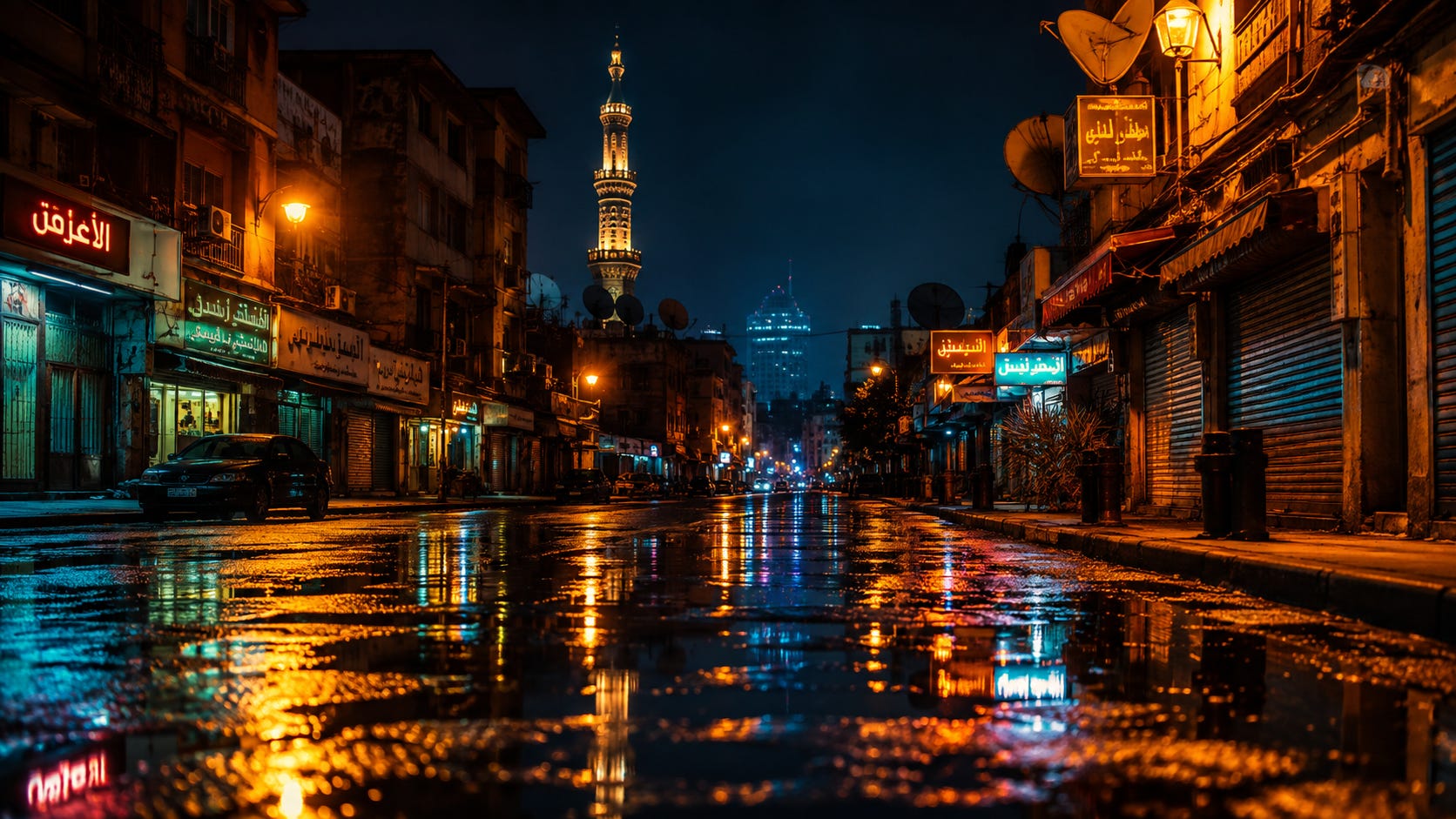
Cairo at midnight threw light upward so faces looked lit from underwater. Ancient and electric, where minarets rose between satellite dishes and the Nile moved through darkness like a rumor of relief.
It pressed in—gentle and relentless—and none of it cared that inside my body the lights were going out.
The street pressed against me—not loud exactly, but pressure. Tonight was cool enough to prickle my forearms, but every few steps a warm current found me. Signage glow caught wet stone, Arabic script flowing down storefront glass. A muezzin’s voice cracked mid-call from a distant minaret. Diesel damp mixed with river iron.
The street smelled of lamb fat and exhaust. The breeze carried sweetness. A child’s voice rose sharp above traffic, calling ya mama to someone who wasn’t there. All of it filtered through wool, through the gathering distance that meant my blood was forgetting how to feed my brain.
Move, I told myself. Move now.
Sugar. Now.
My backpack hit against my shoulder like an accusation. Glucose tablets inside—I always pack them. But my fingers didn’t belong to me anymore. The zipper became a puzzle I couldn’t solve.
The ground was trying to do its job—hold me up—but it wasn’t to be trusted. Light leaked across the pavement in slicks.
Words backed away from me. They always do when the numbers fall: first the easy ones, then the ones I never think about. Later I would remember that language comes from sugar too—that speaking is work, the mouth a machine, machines needing fuel. But there was no later yet, only the narrowing spiral, tighter, tighter, the same thought returning with less grammar: sugar now sugar now sugar now.
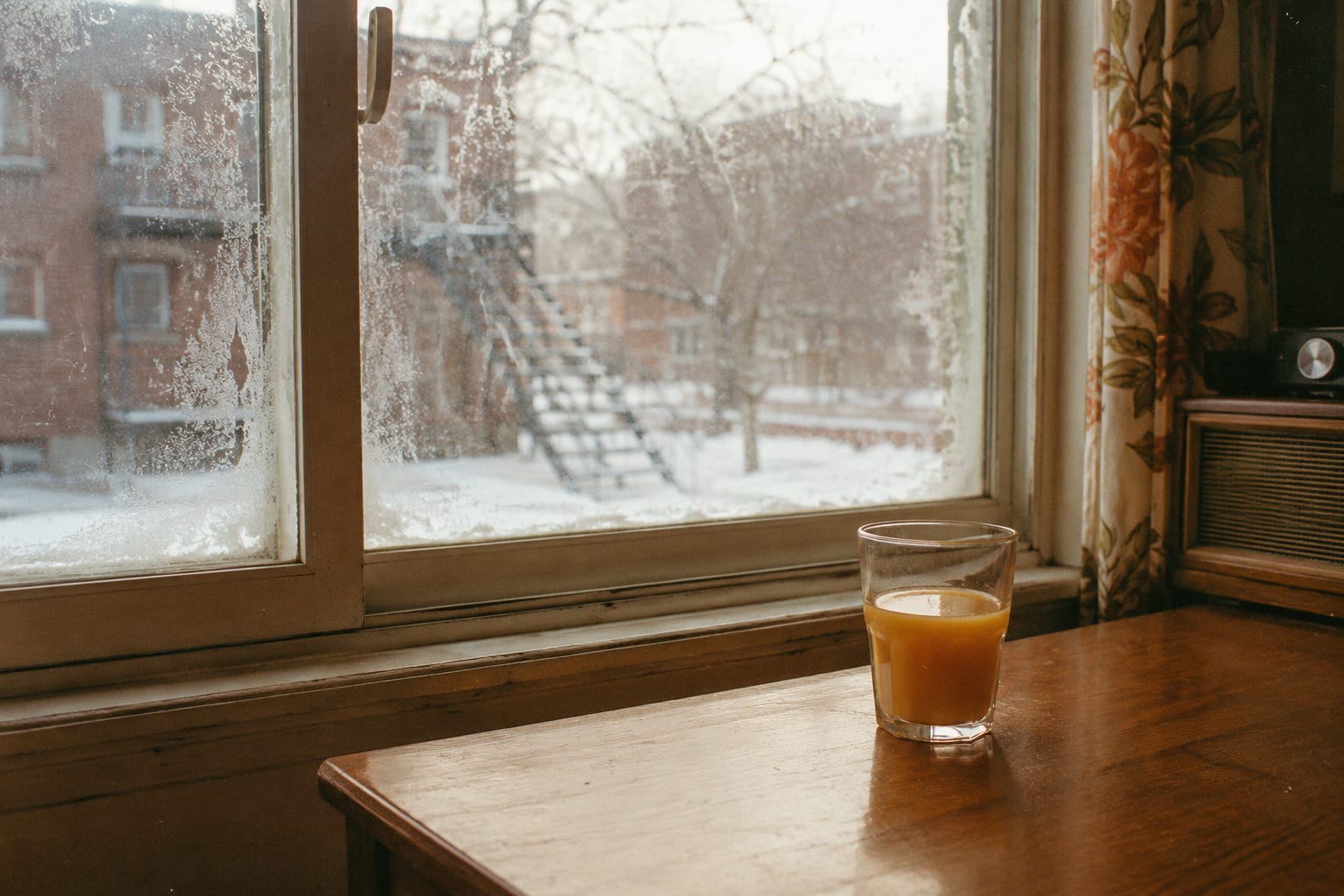
Somewhere in the spiral, I am eleven again. Montreal backyard, December 1967. My mother found me face-down in snow turned pink where I’d bitten through my tongue. My mother’s voice through the fog:
“Mark, can you hear me?”
Orange juice in a small glass, her hand steady against my lips.
“Just a sip, baby.”
The sugar hits and the room comes back—my bedroom, afternoon light, the smell of her perfume mixing with my panic sweat.
But that was Montreal. That was English. That was home, where people understood medical emergencies and spoke my language and knew how to call ambulances.
This is the spiral in Arabic, and no one is coming with orange juice.
sugar now
The neon fractured into shards. Arabic script twisted off street signs like digital snakes spelling nothing I could comprehend. The city breathed in my ear—indifferent, alive, vast enough to swallow a man without noticing.
I pressed through bodies that were less obstacles than weather—the brush of a galabiya against my arm, the heat of a shoulder, someone’s cologne mixing with cigarette smoke and the metallic breath of the Nile drifting in with the December night.
People moved around me like water around a stone. A group of teenagers laughed at the corner, their voices bright with energy I was losing by the second. An old man pushed a cart of bread past me, wheels clicking over uneven pavement.
My heart insisted against my ribs—bang bang bang—trying to push blood through vessels that were forgetting their purpose. My vision coned down until the world became a tunnel smeared with light.
This was Cairo at its most foreign—a place where my emergency would be just another flicker in the endless electric night.
gone
Ten minutes, nine—not numbers exactly but subtraction, pieces of me leaving in advance of the rest.
A boy outside still called out ful medames, voice breaking in the night. The sharp sweetness of mint tea clung to the air.
A doorway glowed ahead. Not the harsh fluorescent of a pharmacy—too far, too bright, too many hands between me and the register—but something smaller, more human. Narrow square of light, windows fogged where warmth met the cool December night. Silhouettes bent over bowls.
Steam leaked from the crack under the door, carrying cumin and garlic. I could taste rice. My body recognized its country before my mind.
The door chime rang sharp when I pushed through—too sharp, like it had struck something loose in my skull. Conversations stopped mid-syllable. Faces turned toward the weather change I’d brought with me. No hostility. No curiosity. Just a restaurant noticing that someone’s emergency had walked through their door.
The room took my measure: hands sparking with tremor.
“Lazem sukkar,” I tried.
The words came out bent wrong, foreign in my mouth, chewed and spat back strange. My tongue worked against glue.
A server appeared—young, maybe twenty, her smile trained for politeness with tourists who wandered in speaking broken Arabic and pointing at things they couldn’t name. Quick syllables, a gesture toward an empty table. She wanted me seated, contained, part of the normal order of things.
I shook my head, pointed toward the back where kitchen sounds leaked through swinging doors.
“Sugar. Need sugar.”
Her smile trembled. She called toward the kitchen, her voice rising like steam. A chorus answered, blurred, distant.
Too long. Too long.
Words. Gone.
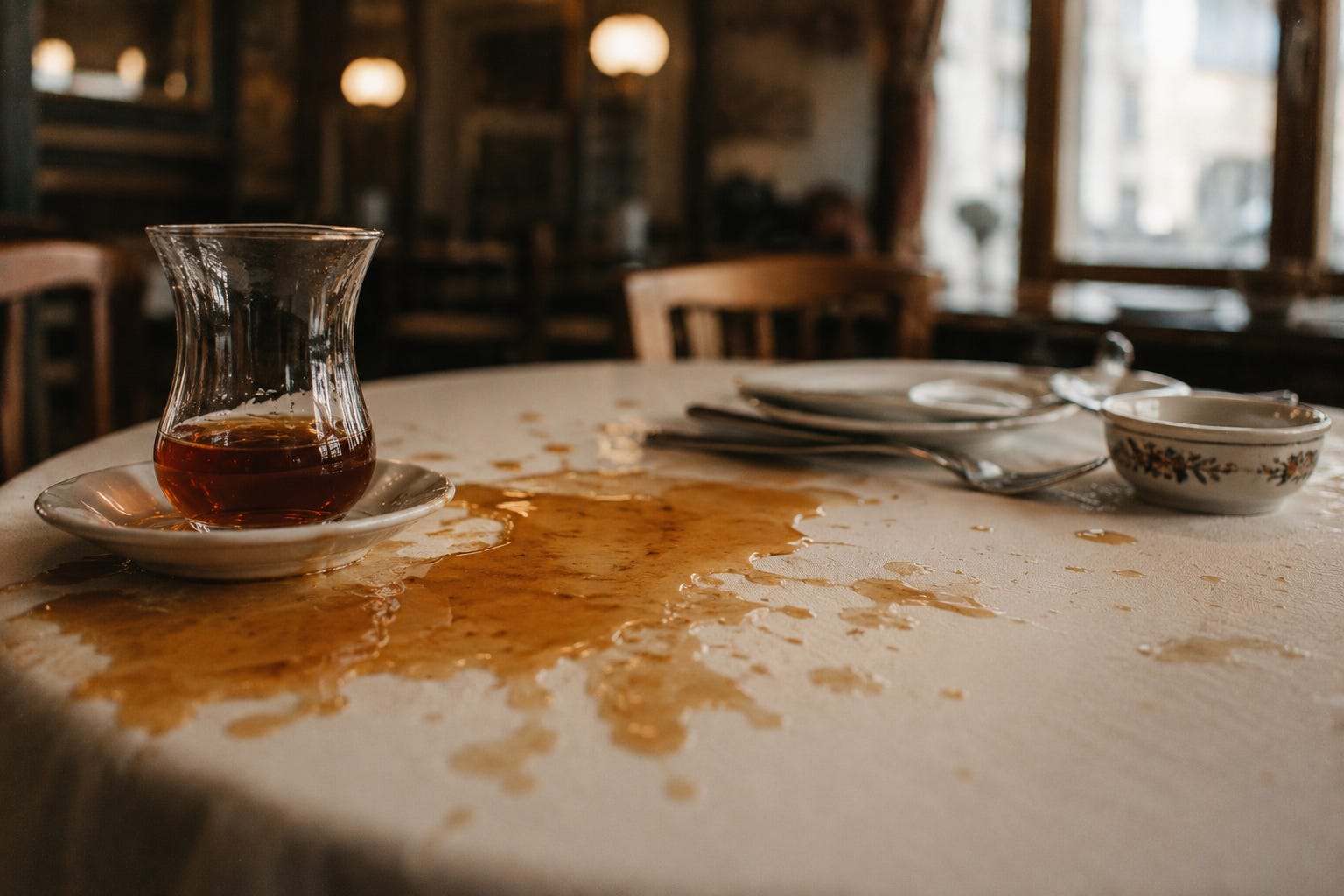
My knees folded. I caught myself against a table, rattling dishes, sending a man’s tea spilling across the white tablecloth in a spreading amber stain. Cold shock against my hand, the brief clarity of sensation cutting through the fog. Chairs scraped. The server’s face went white. Voices blurred into a single worried hum, the universal sound of people realizing someone is in trouble.
“Sugar,” I tried again, louder, but the word sounded foreign now, something chewed and spat back wrong.
Fifteen feet away: swinging doors alive with steam and the promise of sweetness. A kitchen where people worked with fire and blade and understood the alchemy of turning simple ingredients into sustenance. Everything narrowed to that doorway.
Move. Do something. Now.
I pushed past the frozen server. Shouts rose as the doors yielded.
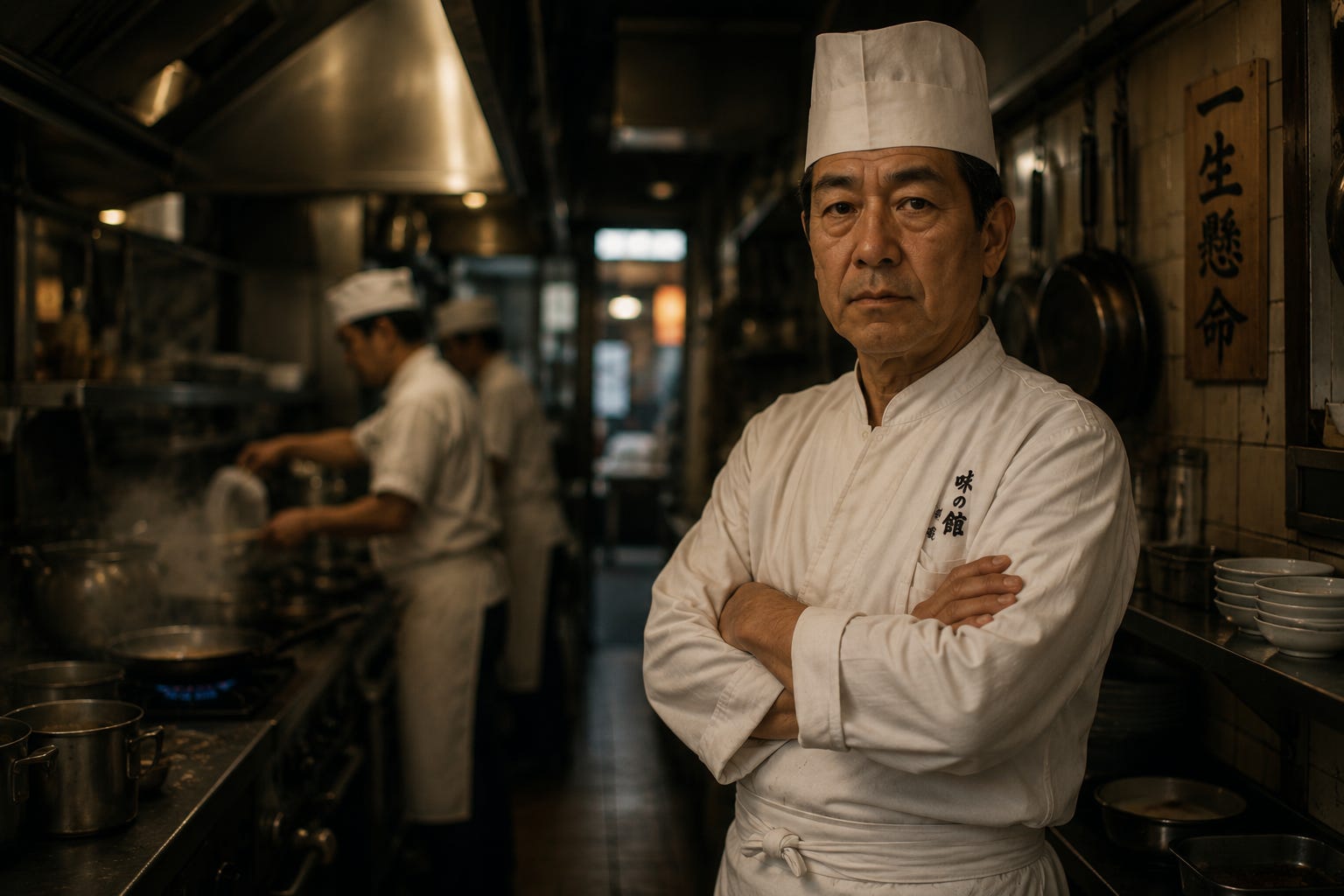
Steam, steel, knives, fire. Three cooks staring—one with a cleaver mid-chop, frozen in the act of reducing an onion to precise cubes; one tending oil that hissed like a living thing; and the head chef, white cap tight across his forehead, eyes like testing oil with a fingertip.
He didn’t move. Didn’t shout. He stood absolutely still, the kind of stillness that comes from years of managing flame and blade.
“Sukkar,” I gasped.
On the steel counter: white crystals in a ceramic bowl, probably meant for tea service, innocent and ordinary and exactly what I needed to stay alive.
I lunged.
Voices broke. A hand reached—too late. Handfuls of raw sugar jammed into my mouth, sweet grit crunching between my teeth, burning my throat. Harsh and glorious. Raw sugar tastes different than glucose tablets—like swallowing lightning, more immediate than the cherry-flavored chalk that dissolves into syrupy paste. This was sugar in its most essential form: crystalline, unprocessed, the kind that knows its job and does it without hesitation.
And then—like the world remembering how to be solid—my vision sharpened. My heart steadied. The curtain lifted.
The head chef still hadn’t moved. Arms folded, expression unreadable. Watching me as if I were another dish in progress, something that needed time and the right temperature to become what it was meant to be.
Behind him, knives resumed their rhythm. Oil resumed its patient conversation with heat. The choreography returned, cautious now but steady, the kitchen absorbing my crisis and finding a way to work around it.
I breathed. Swallowed. Whispered the only word left: “Shukran.”
He didn’t nod right away. He let the moment hold—me with sweet grit between my teeth and a hand on the counter like a drowning man clutching a rope, the kitchen heat folding around me, the hiss of oil settling back from alarm to lullaby.
Then a single word from him rearranged the room. A towel arrived, heavy and clean, citrus scent still clinging, laid into my palm like a promise. A cup of tea appeared—steam rising, floral and complex, the kind that tastes like someone else’s memory of comfort.
He pointed to a stool tucked against the prep table, not for customers, not really for anyone but the people who belonged here. In that instant, I belonged.
I sat because my legs had used up their last lie. The towel drank my sweat and gave back warmth. I wrapped both hands around the cup and felt the tremor slowly settle into a smaller radius, a quiet earthquake receding into manageable territory.
The first swallow was a shock—warmth and tannin landing on a tongue that had forgotten its alphabet—then it was mercy. The metallic taste backed away. Color stopped sliding and chose a place to live.
Recovery comes like sound after diving deep. First the bass—thud in the chest, the beat righting itself—then your thoughts remember their names, then words remember what they mean. My jaw clenched so hard I thought my teeth would crack. Sweat turned ice-cold, shirt clinging like wet paper.
Time did its trick: it blew apart and stacked itself into thin leaves. In one layer, I was still falling. In another, I was already gone. In this one, I lived.
The chef watched me with brief glances learned from fire. A crescent of pale skin where his cap kept the sun away. A scar across two knuckles, shiny as river stone.
To borrow life from strangers is to walk out of a kitchen with their breath still in your lungs. The chef absorbed my collapse into his rhythm, made space for my emergency in his careful world.
He said something to the server—softly, the way you talk when there is a baby asleep—and she brought a bowl of rice that had been waiting, steamed and sticky and perfect, the kind that sticks to your lip and brings your mouth back to itself.
I ate slowly because I could, because the emergency had unclenched. The first bite landed and kept landing. The second steadied more than my hands. The third said: you will leave this room under your own power, and there will be weather outside, and you will feel it.
The room was a tiny universe where everyone returned to their orbits as if nothing had happened. Mercy is this: absorb the shock and keep the rhythm. The kitchen found its flow again, incorporating my rescue into the evening’s work, making it part of the story they would tell later—the night the foreign man came stumbling through their doors speaking broken Arabic and needing sugar.
When my body settled into the low hum that means the numbers are finding home, I tried to pay with money I had turned damp in my pocket.
The chef raised a palm without looking up, as if closing a door gently.
He had not fed a customer. He had prevented a death. Money is a different language entirely. Mercy, though, needs no translation—it passes hand to hand, older than currency, older than nations.
So I bowed instead. I am not good at it. My body learned its manners in Montreal kitchens where gratitude looks like dishwater and stacked plates, where thank you comes in the form of showing up on time and doing your work and not making anyone else’s job harder. I bowed anyway—clumsy and sincere and probably wrong by local standards. He bowed back, the exact weight for the bridge between us, a perfect calibration of respect and acknowledgment.
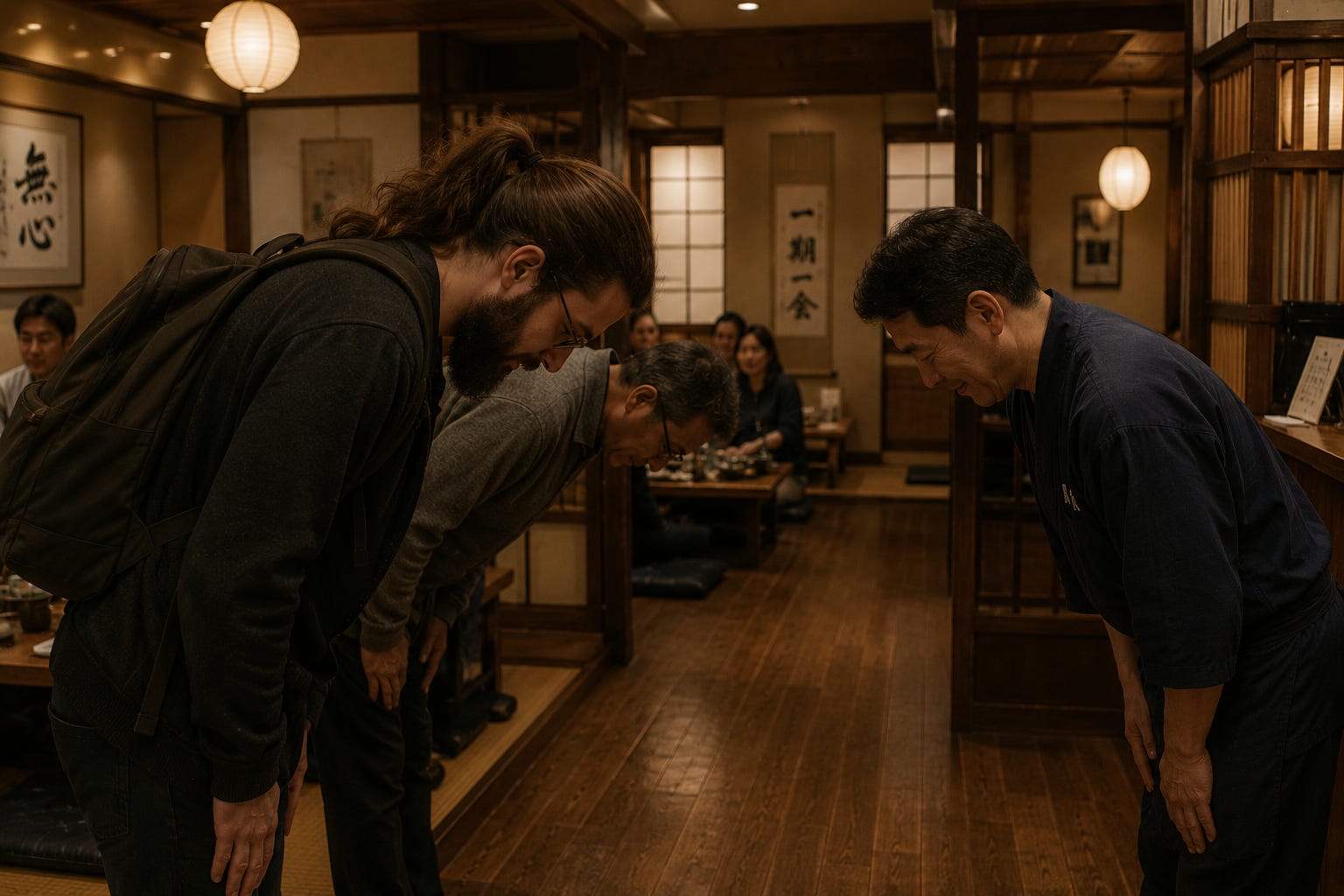
When I stood, the room tilted just enough to remind me not to be clever, not to assume I was entirely out of danger. The server’s hand appeared near my elbow, not touching, just an offer without the humiliation of touch. I nodded once, grateful for the gesture and for her understanding of what I needed.
The towel lay folded now, squared with the practiced affection of people who make order in the midst of heat and flame. I left it where it was. I drank the last of the tea, feeling it settle in my stomach like an anchor.
At the door, the chime gave its too-clear note. The cool found my forearms, the warm current stitched itself along my ribs. The city pressed in again, but less like a demand and more like a tide I could stand in.
Signage glow found puddles and turned them into tiny galaxies. I stepped back under the sky that had been a bruise and now remembered other colors. Raw sugar burned between my teeth, a sweetness rough as sand, the taste of survival carried home in my mouth.
fin
Overwhelmingly sad and beautiful